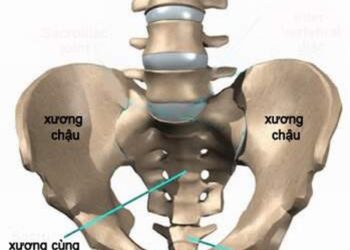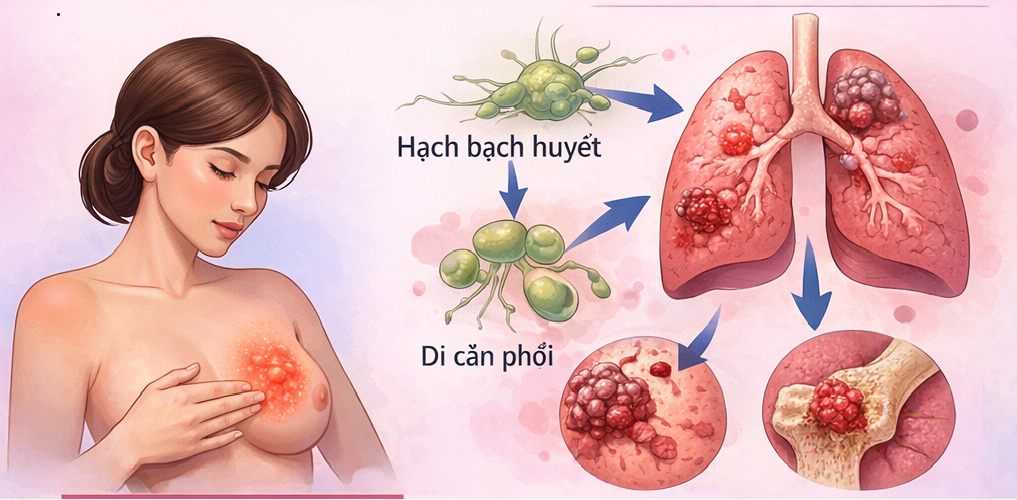
There are cases in which, after treatment, physicians are satisfied and patients feel completely reassured—life resumes, and in the busyness of everyday living, the disease is gradually forgotten. Yet five or six years later, sometimes even ten, when recurrence is finally detected, metastases to bone or brain have already occurred. More cautious patients, even three to five years after completing therapy, continue to worry: Has the cancer truly been eradicated, or does a “root cell” still remain? If so, how can it be detected? How can recurrence be prevented?
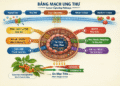
Breast cancer can recur even after surgery, chemotherapy, or radiotherapy. The cause is not only residual tumor tissue, but primarily a small, “hidden” subpopulation of cells known as cancer stem cells (CSCs). These cells are maintained by critical survival signaling pathways such as PI3K/Akt/mTOR, NF-κB, STAT3, Wnt/β-catenin, EGFR, and the Bcl-2/Bax–caspase system. As long as these pathways remain active, cancer retains a “route of return” [6].
From a theoretical standpoint, therefore, reducing the risk of recurrence requires two actions: (1) weakening these survival signaling axes, and (2) targeting residual cancer cells, particularly CSCs.
- Celastrus monospermus – Targeting the “Survival Axes”
The principal bioactive compound studied from this plant is celastrol. Reviews and mechanistic studies indicate that celastrol can simultaneously inhibit multiple key signaling pathways, including PI3K/Akt/mTOR, NF-κB, STAT3, EGFR, VEGF, Wnt/β-catenin, ROS/JNK, and the Bcl-2/Bax–caspase system, while also interfering with cellular stress response axes such as HSF1–AMPK–YAP [1,2].
In simple terms, rather than “striking” a single target, celastrol disrupts—effectively shutting down—the control network that enables cancer cells to survive, proliferate, and adapt. This suggests a theoretical role in creating a biologically unfavorable environment for the long-term persistence of cancer cells and CSCs after treatment [1].
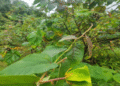
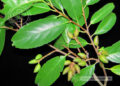
Notably, we have recently identified this plant in Vietnam. Among the Tày ethnic group in mountainous regions, it is called Máy la cẩm tày, while some traditional healers refer to it as Mộc hoa chanh, and it is commonly used with reported effectiveness in thyroid cancer.
- Centipeda minima – Inhibition of Proliferation and Migration
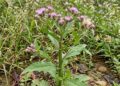
From the field herb Centipeda minima, researchers have isolated Brevilin A, a sesquiterpene lactone. In breast cancer cell lines, particularly MDA-MB-231 (a representative of triple-negative breast cancer, a subgroup with a high risk of recurrence), Brevilin A has been shown to:
- Inhibit cell growth in a time-dependent manner
- Induce cell cycle arrest at the G2/M phase
- Activate programmed cell death (apoptosis)
- Suppress cell migration
The primary mechanisms reported involve inactivation of Akt/mTOR, NF-κB, and STAT3, which are key axes in breast cancer cell proliferation and resistance to apoptosis [3,4].
- Scutellaria barbata – Broadening the Spectrum of Action
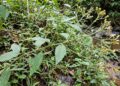
Scutellaria barbata contains multiple bioactive flavonoids and diterpenoids. Studies indicate that its extracts and certain isolated compounds can induce apoptosis and reduce the expression of anti-survival proteins in cancer cells, including breast cancer lines such as SK-BR-3 (HER2-positive) [5].
Importantly, this herb acts on a different biological subgroup of breast cancer, thereby expanding the mechanistic “coverage” of the three-herb combination.
- The Three-Herb Combination – A “Multi-Layered” Strategy
From a systems perspective, these three herbs can be positioned across three levels of action:
- Celastrus monospermus (celastrol): Weakens the foundation of survival signaling and the axes that maintain CSCs [1,2,6].
- Centipeda minima (Brevilin A): Directly suppresses proliferation and migration and activates apoptosis via Akt/STAT3/NF-κB pathways [3,4].
- Scutellaria barbata: Adds activity against other breast cancer subtypes, particularly HER2-associated groups and anti-apoptotic protein networks [5].
Theoretically, this represents an approach “from root to branch”: disrupting intracellular control systems while simultaneously limiting the biological behaviors of cancer cells attempting to recover.
- Scientific Limitations and Research Gaps
Most existing evidence is derived from cell-based and animal models. To translate this approach into clinical application, it will be necessary to standardize extracts, determine safe dosages, assess interactions with conventional anticancer therapies, and conduct controlled clinical trials [1,3,6].
Recently, a clinical practice–based research group has transformed this hypothesis into a real-world pilot project: patients take the herbal combination for three consecutive months each year, then discontinue, with a planned follow-up period of five years. Definitive conclusions, however, are expected only after long-term observation.
Conclusion
From a molecular biology perspective, the combination of Scutellaria barbata – Centipeda minima – Celastrus monospermus forms a theoretical model aimed at simultaneously targeting residual cancer cells and the survival signaling axes associated with breast cancer recurrence [1–6]. This represents a systems-oriented approach that opens avenues for deeper investigation into the role of herbal medicine as a supportive strategy following standard treatment.
Selected References
- Kannaiyan R, Shanmugam MK, Sethi G. Molecular targets of celastrol derived from Tripterygium wilfordii: Potential role in cancer prevention and treatment. Cancer Letters. 2011;303(1):9–20. doi:10.1016/j.canlet.2010.12.023
- Cascão R, Fonseca JE, Moita LF. Celastrol: A spectrum of treatment opportunities in chronic diseases. Frontiers in Medicine. 2017;4:69. doi:10.3389/fmed.2017.00069
- Wang J, et al. Brevilin A induces cell cycle arrest and apoptosis and suppresses Akt/STAT3 signaling in human breast cancer cells. Journal of Cellular Biochemistry. 2019;120(7):10304–10315. doi:10.1002/jcb.28312
- Zhang H, et al. Brevilin A inhibits migration and invasion of triple-negative breast cancer cells via suppression of NF-κB and PI3K/Akt/mTOR pathways. Phytomedicine. 2020;70:153224. doi:10.1016/j.phymed.2020.153224
- Dai ZJ, et al. Scutellaria barbata D. Don inhibits tumor angiogenesis and induces apoptosis in breast cancer. Asian Pacific Journal of Cancer Prevention. 2013;14(6):3707–3712. PMID:23886136
- Phi LTH, et al. Cancer stem cells (CSCs) in drug resistance and their therapeutic implications in cancer treatment. Stem Cells International. 2018;2018:5416923. doi:10.1155/2018/5416923
Dr. Hoàng Sầm
Chairman, Vietnam Institute of Indigenous Medicine